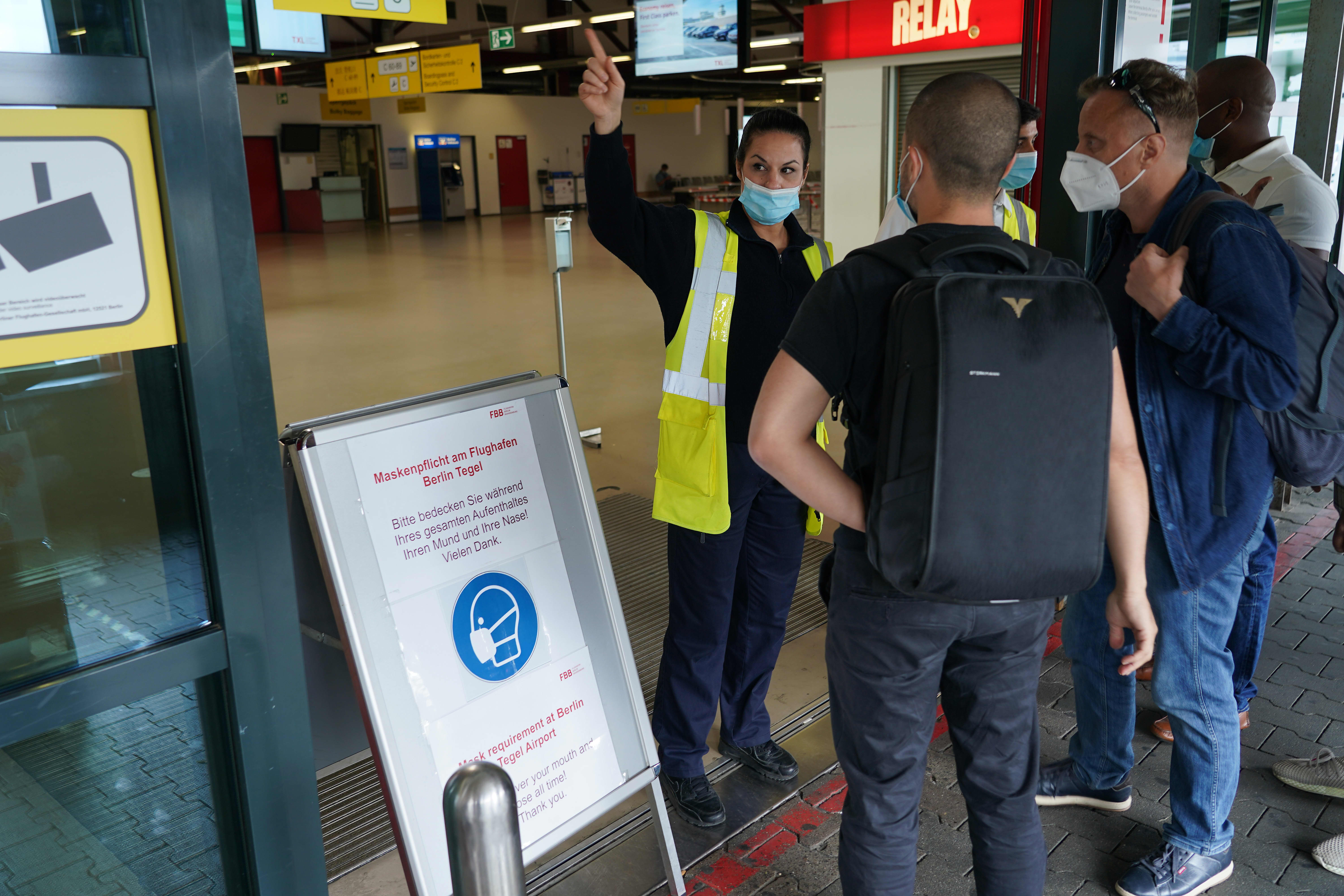
Travelers from a list of 15 nations will be allowed entry to the European Union starting Wednesday, but the United States is not on the list.
Thirty countries in Europe (26 of which are members of the EU) closed their external borders in March to mitigate the spread of Covid-19. As most of them reopen their economies, they are also starting to welcome external visitors — though at a much slower rate than before the pandemic.
European Union governments decided Tuesday to open their external borders to Algeria, Tunisia, Australia, Canada, New Zealand, Georgia, Japan, Montenegro, Morocco, Rwanda, Serbia, South Korea, Thailand and Uruguay. Chinese travelers will also be allowed in the EU, but only if China announces that it will also accept European visitors.
The decision was taken based on the health situation of the countries of origin and will be reviewed every two weeks.
For each country on the list, the EU said the following criteria needed to be met: the number of new Covid-19 cases over the last 14 days and per 100 000 inhabitants needed to be close to or below the EU average; there should be a stable or decreasing trend of new cases over this period in comparison to the previous 14 day; and the overall response to Covid-19 needed to be considered.
The recommendation was given to all EU member states and the Schengen-associated countries (Iceland, Lichtenstein, Norway and Switzerland).
However, it is non-binding, meaning that EU member states can reopen their borders to whichevercountries they want. The European Commission, the executive arm of the EU, has insisted that external borders should be reopened in a coordinated way to avoid any travel chaos, but ultimately it is a national decision.
In this context, European governments have been advised to not lift the travel restrictions for non-listed countries until it has been decided in a coordinated manner.
The United States currently has the highest number of coronavirus infections — nearly 2.6 million — in the world, according to Johns Hopkins University. Dr. Anne Schuchat, principal deputy director of the Centers for Disease Control and Prevention, said in an interview Monday that the virus is moving too rapidly across the United States, in what she described as a "very discouraging" situation.
In March, President Donald Trump suspended travel from Europe into the United States. At the time, the EU criticized the decision for being taken "unilaterally and without consultation."
The situation is changing rapidly, but here is what we know about travel to Europe right now.
Who is allowed to enter Europe?
As of July 1, European nations (all members of the European Union, as well as the non-E.U. European nations of Iceland, Norway, Switzerland and Liechtenstein) are expected to begin opening their borders to residents of Algeria, Australia, Canada, Georgia, Japan, Montenegro, Morocco, New Zealand, Rwanda, Serbia, South Korea, Thailand, Tunisia and Uruguay. Residents of Andorra, San Marino, Monaco and the Vatican will also be allowed entry. China is on the list, “subject to confirmation of reciprocity” — that is, if the country will open its borders to European travelers. The official press statement noted that individual European nations may decide to take a progressive approach to lifting restrictions on travel from the listed countries. Residents of the United States, where the spread of Covid-19 has not been controlled, are not allowed to enter the European Union unless they qualify for an exception.
How often will the list be reviewed?
European officials have said that the list will be reviewed every two weeks. It’s possible that the United States will be added to the list if the country’s epidemiological situation improves. A country may also be removed from the list if its situation worsens.
Are there any exceptions?
The restrictions do not apply to European citizens or residents “independent of the purpose of travel,” according to the official recommendation, nor to health workers, seasonal farm workers, diplomats, humanitarian workers, transit passengers, asylum seekers, students and “passengers traveling for imperative family reasons,” among a handful of other exceptions. You can find the full list of exceptions here.
I’m American and I don’t qualify for any of those exceptions. Is there any way for me to get to Europe this summer?
Americans are still allowed to fly to Ireland and Britain, both of which lie outside Europe’s free movement zone, known as the Schengen Area. In both Ireland and Britain, however, all visitors are required to undergo mandatory 14-day quarantines on arrival. In Britain, you can be fined £1,000 (about $1,230) for violating the quarantine rules.
If I fly to Britain or Ireland and complete the mandatory 14-day quarantine, could I travel onward to Europe from there?
Probably not, unless you can prove that you have a residence or immediate family links in Europe. Check with the border control authority of the European country that you are hoping to visit to find the latest rules.
I’m an American citizen, but I live in one of the countries on the approved list. Will I be allowed to fly to Europe?
The rules are based on the country in which travelers are residents, so American citizens may be allowed to enter Europe if they are residents (and can provide proof of that residency) in one of the countries on the approved list. At the same time, citizens of approved countries who reside in the United States may not be allowed entry. In either case, before traveling, it’s best to check with the border control authority of the European country that you wish to visit.
I’m already in Europe. Is it possible to move around?
Many European countries are now open to visitors who are residents in other parts of Europe. To find information on a specific European country, visit Re-open EU, where you can find the latest rules governing travel within the European Union.
I thought that Iceland and Portugal were going to be open to Americans this summer. Is that still true?
In May, Icelandic officials said the country would be opening up to visitors from the United States and other places, provided they submit to a Covid-19 test on arrival. Now, Iceland is welcoming visitors only from Europe. The same is true in Portugal, which had indicated that it would be opening up to visitors from the United States. Now, American visitors — unless they are Portuguese residents or qualify for some other exception — are not allowed entry.
I already booked a flight to Europe this summer. Is it possible to get a refund?
If you have already booked a flight to Europe, you should be entitled to either a flight credit or a refund, depending on when you booked and what type of ticket you purchased. Call your airline to ask about rebooking, or to request a refund.
What about refunds on hotels or other bookings?
Many hotels and tour operators are offering credits or refunds for existing bookings. Check with your service provider for details.
Are Europeans allowed to visit the United States?
Anyone who has been “physically present” in the Schengen Area or in Britain or Ireland in the past 14 days is not allowed to enter the United States unless the traveler qualifies for one of the exceptions set out in the Presidential Proclamations that were issued on March 11 (for the Schengen Area) and March 14 (for Britain and Ireland). The rule does not apply to United States citizens and permanent residents, nor to their qualifying family members. The U.S. State Department offers more information.
When it come to travel these days (and especially business travel), a laptop is an essential addition to your carry-on. But the best travel laptop isn’t always the same device you'd use while at the office. And sure, many laptops might tout that they’re great for taking on the go, but we've learned that not every option is created equal.
To identify the best travel laptop on the market, we spent the past few months working, watching movies, editing photos, and gaming on several different models before narrowing down to our six favorites. In choosing our favorites, we took a few key factors into account:
Weight: When you’re carrying a laptop around with you all day, be it to a coffee shop or in transit to your destination, an extra pound can make a dramatic difference. Almost all of the options on our list weigh in at less than two and a half pounds; some are even lighter.
Battery life: You want a laptop that’s going to be able to make it from point A to point B on a single charge, not one that’s going to run out of battery power halfway through your cross-country flight.
Performance: A light laptop won’t do you any good if you can’t get all your work done on it. We looked for laptops that packed a punch in a tiny package.
Below, the six best travel laptops to buy now, whether you're looking for something that can double as a tablet for easy vacation reading, the lightest option out there, or a laptop that functions just as well as a WFH back-up for when you're stuck at home.
All products featured in this story are independently selected by our editors. However, when you buy something through our retail links, we may earn an affiliate commission.
Best overall: MacBook Air 2020
The MacBook Air has been the gold standard for travelers for a while now, due to its ability to handle complex tasks without added bulk. This year’s Air replaces Apple’s problematic butterfly keyboard with a new Magic Keyboard, and offers faster graphics and double the storage capacity of previous versions. You can purchase models with up to 2TB of internal SD storage, enough to hold over 70 hours of 1080p video. You can also watch up to 12 hours of video on the device on a single charge.
Touch ID makes unlocking the laptop a snap, and the edge-to-edge Retina display offers a resolution of 2560 x 1600, making everything from web pages to videos crisp and easy to read or see. The computer weighs in at 2.8 pounds, which, while once considered light for Macs, is a bit heavier than some of the other options out there. That said, if you use a Mac already, transitioning to the Air will be a relatively seamless experience and that extra pound will likely only come into play if you have to carry the laptop around for long periods of time.
Pros: This full-powered computer with a great keyboard is easy for Mac users to transition to.
Cons: While great for web-based work, the computer gets overloaded if you need to have multiple software programs or a large volume of browser tabs open at once.
Lenovo’s Yoga C940 is our favorite for both work and play, thanks to its 4K display and powerful Intel Core i9 that can handle heavy photo and video editing software, on top of basics like word processing.
The keyboard side easily folds back to put the device in tablet mode, perfect for watching a movie on your tray table, and the C940 is available with storage up to 2TB, so you can queue up viewing materials for your entire trip without running out of space. The Yoga’s Dolby Atmos speaker system also makes it a solid choice for watching movies; however, the laptop weighs in at 4.41 pounds, which is almost double the weight of other options on our list.
Pros: The device's pen fits into its side, making it easy to carry around without losing it.
Cons: Travelers having to carry their gear for extended periods of time will notice the laptop’s 4.41-pound weight.
Best combination laptop and tablet: LG Gram 2-in-1
LG’s 2-in-1 does double duty as both a laptop and a tablet. The 2.3-pound device folds easily in half, turning the keyboard into a stand for when you want to binge watch or video chat. It's battery life was also among the best we’ve seen, with the computer able to last up to 21 hours on a single charge.
Like some of the other Windows options we tested, the Gram 2-in-1 offers smart pen support. The laptop ships with a AAA-powered LG Stylus Pen that you can use to take handwritten notes on the screen, or mark up drawings and documents. Fingerprint recognition makes signing in as easy as touching the computer’s power button, and the laptop comes with two USB slots, in addition to the USB-C port used for power, so you can connect a few devices to it without using dongles.
Pros: The ability to fold it in half, and multiple USB ports, make this ultraportable device especially convenient.
Cons: The included pen doesn’t have a way to attach to the laptop, so you have to carry it separately. (We recommend a tech organizer like Bellroy's so you don't lose it.)
Samsung’s Galaxy Book S is both thin and lightweight, at just .46 inches thick and 2.12 heavy, making it a great choice for travelers whose carry-on space is at a premium.
The laptop has a built-in SIM card slot, so you can also use it to connect to mobile networks through your phone plan. With the fingerprint sensor built into the power button, signing in is a breeze (and you can feel good about the added security). Since the device is so thin, it doesn’t offer any full-sized USB ports, just two USB-C ports, which means you’ll need to pack a dongle to attach any additional devices like keyboards or cameras.
The laptop isn’t as high-powered as some of the other options, so it's not the best choice for running a lot of programs at once—but those who mainly work with documents and spreadsheets on the go will have all the power they need.
Pros: The built-in SIM slot allowing access mobile networks on-the-go, and the laptop’s thin design, make it easy to use on the move.
Cons: No built-in traditional USB ports means that using the laptop with other devices is challenging, and while great for things like web browsing and word processing, the laptop lags when trying to handle more complex tasks.
Technically, this is actually a tablet that works like a laptop—but if you’re looking for something ultra-light, you’re not going to find anything as compact as Microsoft’s 1.7-pound Surface Pro X.
The tablet is 7.33mm thick (just over a quarter of an inch), making it thinner than many cell phones, even with the removable keyboard attached. (Bonus: There's a stylus tucked inside the keyboard.)
The device’s battery lasts up to 13 hours, ensuring you’ll have enough juice to make it through the day. If that battery does wane on long journeys, you can get it back to 80 percent in just an hour thanks to a quick charging feature. LTE support also allows you to stay connected even when WiFi isn’t available, helpful for road trips where you need to stay connected from the passenger seat. One downside: While it’s able to handle things like word processing, email, and spreadsheets with ease, it is a tablet after all. If you need to run more complex software, like for video editing, you might need to opt for a more high-powered machine.
Pros: Fast charging means you’ll always have power when you need it, and the ultra thin profile makes it easy to carry around. (Plus, we love a stylus that stores inside the keyboard like this one.)
Cons: The Surface Pro X tablet can’t run many applications you might use on your regular computer.
Best for those who need big displays: Microsoft Surface Laptop 3
While most people think of the tablet version when they hear “Surface,” Microsoft also makes a pretty solid laptop by the same name. The touchscreen laptop comes in both 13.5” and 15” varieties, the larger being the best for those who need a little extra screen to work with. The laptop’s battery can last up to 11.5 hours on a single charge, and, like the Surface Pro X, it can charge to roughly 80 percent after just an hour of being plugged in, so you could potentially get enough juice to make it through your long-haul flight just by charging up at the gate.
The Smart Pen support allows you to precisely draw on the screen or mark up documents. However, that extra screen space is reflected in the device’s weight: The 13.5” version of the laptop weighs in at 2.84 pounds, while the larger 15” is 3.40 pounds. (Both, it's worth noting, weigh less than the Lenovo Yoga, the heaviest on our list.)
Pros: The 15” version is a powerful machine with a ton of screen in a small package; and while that brilliant screen drains the battery, fast charging ensures you’ll have power when you need it.
Cons: The larger version can be heavy to carry around for longer periods of time, and the laptop is overall bulkier than other options on our list.
BOSTON (WGGB/WSHM) -- Officials have updated travel guidelines to support the state's COVID-19 response.
Gov. Charlie Baker announced Tuesday that effective Wednesday, July 1, all travelers arriving to Masschusetts - including Massachusetts residents returning home - are instructed to self-quarantine for 14 days.
The new guidance does not apply to travelers from:
Rhode Island
Connecticut
Vermont
Maine
New Hampshire
New York
New Jersey
"These surrounding states, like Massachusetts, are seeing a significant decline in cases and new hospitalizations. Travelers arriving to Massachusetts from these seven states are exempt from the 14-day self-quarantine directive," Baker explained.
In addition, workers designated by the federal government as essential critical infrastructure workers are also exempt.
Anyone displaying symptoms of COVID-19 are being instructed not to travel to the Commonwealth.
The state is also reminding all Massachusetts residents and visitors that the use of face masks or coverings in public places where you can't socially distance from others is required.
The NFL is still planning to have teams report to training camp as scheduled on July 28.
But if you’re a Buffalo Bill, for instance, you’d probably be safer giving yourself a head start getting there.
As noted by Tim Graham of TheAthletic.com, 60 of the 88 players on the Bills roster at the moment are from places which otherwise can’t travel into New York without a lengthy quarantine.
New York Governor Andrew Cuomo just announced that travelers from 16 states have to quarantine for 14 days before entering the state.
Those states, the hardest hit by the COVID-19 pandemic at the moment, are: Alabama, Arkansas, Arizona, California, Florida, Georgia, Iowa, Idaho, Louisiana, Mississippi, North Carolina, Nevada, South Carolina, Tennessee, Texas, and Utah.
The Giants and Jets would ostensibly be subject to the rule as well, since they train in New Jersey and that state has followed the same guidance for travelers, and the locations and sheer number of states on the list would impact practically every roster in the league.
The policy allows for exceptions, including for business travel, listing truckers as an example.
“Individuals traveling for business should still consider postponing travel to the extent possible,” it reads. “Individuals are encouraged to self-monitor for symptoms upon return from any travel to an impacted state, and employers should consider screening employees for symptoms before permitting them to return to work.”
So while players technically can show up, the policy was written because going from places in the middle of an outbreak to a place that isn’t is a good way to create a new outbreak.
It’s also another problem the NFL has to address, as the clock ticks toward their anticipated gatherings, and the inevitable positive tests that follow.
Just recently, I’ve been wanting to take a vacation somewhere. We had to cancel a couple of trips within the past few months and I’m not sure when we’ll be able to get away, but that doesn’t mean I can’t start planning. At the very least it’s fun to look through some travel guides and dream of a getaway or even just a day trip for a kind of staycation! Some new guidebooks have caught my eye recently.
“Rockhounding New England: A guide to 100 of the Region’s Best Rockhounding Sites” by Peter Christofono is one of them. Rockhounding is basically amateur geology. The website www.rockhoundtimes.com states that “Rockhounds are people who cannot pass by a pretty rock without picking it up for a closer look.” The guidebook lists different places, including quarries, that the public can visit. As an aside, did you know that the state mineral of Connecticut is garnet and that the state fossil is dinosaur footprint? Even if you don’t see yourself becoming a collector, this book is full of interesting information and pretty cool pictures.
Another new travel book that may be of interest is “Walking the Cape and Islands” by David Weintraub. This book also has fabulous pictures and in-depth descriptions of 72 walks and hikes. One hike I definitely want to do one day is Provincetown out to Long Point Lighthouse right at the tip of the Cape. You have to cross a dike making sure to be mindful of the tides so that you don’t get stranded. Sounds like quite an adventure to me!
Finally there’s “Easy Weekend Getaways in the Hudson Valley and Catskills” by Carly Fisher. It’s a little bit of a different type of travel guide with Fisher focusing on things like “experimental art, incredible agriculture, action-packed outdoor adventures, artisanal producers and makers, bizarre and fascinating historical attractions.” What would a travel book be without beautiful photographs, and this volume does not disappoint. The Hudson Valley and Catskills have, in my opinion, some of the most beautiful landscapes.
There’s a lot more new travel books coming in, including a gorgeous National Geographic volume about national parks by Erika Hueneke. While this may not be the year any of us get to travel, we can enjoy passing some time making a “to-visit” list for the future. Go to our website — westerlylibrary.org — to learn how you can make an appointment to visit the library.
Trending audiobooks on Hoopla
1. “The Ballad of Songbirds and Snakes” by Suzanne Collins
2. “So You Want to Talk About Race” by Ijeoma Oluo
3. “Stamped from the Beginning” by Ibram X. Kendi
4. “Harry Potter and the Sorcerer’s Stone “ by J. K. Rowling
5. “If I Were You” by Lynn Austin
Trending ebooks on Hoopla
1. “The New Jim Crow” by Michelle Alexander
2. “Me and White Supremacy” by Layla Saad
3. “If I Were You” by Lynn Austin
4. “The Woman in the Window” by A. J. Finn
5. “Stealing Home” by Sherryl Woods
Trending Movies on Hoopla
1. “Hope Springs”
2. “The Postcard Killings”
3. “The November Man”
4. “Hutsulka Ksenya”
5. “The Joy Luck Club”
Check out any of these materials (no holds list or wait time) with your library card by visiting www.hoopladigital.com. Contact reference@westerlylibrary.org with questions.
This Week
MONDAY — 9 a.m.-3 p.m., Kids Take & Make Crafts: 4th of July Popsicle Craft – Grab a bag of supplies from the ‘Kids’ tote that will be located outside the Library front door. Each Monday there will be a new craft. Supplies are limited, first come, first serve. 1 per child; 9 a.m.-3 p.m., Teen Take & Make Craft: Bee Garden and Journal – Grab a craft kit for teens! Each week will feature a different bag of goodies for you to take home and assemble. Supplies limited, 1 per teen; 10-10:15 a.m., Kids Mindful Monday Video – Don’t lose your cool! Check out some fun tips, tricks and activities to help keep calm and summer on! These short, pre-recorded videos are on our “Kids Online Programming” Facebook Group; 3-3:15 p.m., Kid Stories with Sara – Enjoy some fun stories with Sara! These short, pre-recorded videos are available on our “Kids Online Programming” Facebook group.
TUESDAY — 11 a.m.-12 p.m., Teen Trivia with Kahoot – Join us for some trivia fun! We’ll be meeting through Zoom and using the Kahoot app. Register in advance by emailing skobos@westerlylibrary.org; 1-4 p.m., Community Resource Advocate – Our volunteer Community Resource Advocate is available via email to help connect you with the local services and resources you need. Email her at advocate@westerlylibrary.org; 2-3 p.m., Virtual Film Club – Join us on Zoom as we discuss the films: “On the Waterfront”, “Silent Light”, and “Miracle in Cell No. 7”. Contact cbadowski@westerlylibrary.org to register; 2-2:15 p.m., Kids No-Bake Snacks – Join Judy and Meagan and beat the heat with some yummy treats! Find these short, pre-recorded videos on our ‘Kids Online Programming’ Facebook Group.
WEDNESDAY — 9:30-10 a.m., Essentrics/Classical Stretch Class – This 30 minute class in the park (appropriate for all ages and fitness levels) will move, elongate and strengthen all the muscles chains in the body. We recommend bringing a mat, towel, and water; 10-10:30 a.m., Zoom Book Chat (ages 6-11) – Come chat with the Westerly Children’s Librarians for a ‘red,white and blue” themed book chat. Pre-registration is required.
THURSDAY — 10-10:15 a.m., Kids Around Town Storytimes Video – Join Judy and Meagan as they travel to various locations in our downtown community to read fun, themed picture books; 3:30-4:30, Teen Virtual Book and Writing Club – Join us on Zoom for an open discussion on anything book or writing related! Email skobos@westerlylibrary.org to register.
FRIDAY — 10-10:30 a.m., Virtual Music with Mike (Ages birth and up) – Join Mike Markowitz with some fun songs to sing and dance around to! Pre-registrants will be sent a link and password to join the Zoom program.
SATURDAY — The library will be closed for Independence Day.
Caroline Badowski is the head of reference at the Westerly Library.
Skamania Mania is off to a good start, bluegills are schooling and biting on the weed edges and a few big pike, bass and muskies are being caught as we head into another holiday.
Skamania steelhead fishing had been very good around the river mouths and shorelines of Lake Michigan prior to last week’s weather change.
It’s been pretty good in Trail Creek as well, and while a few fish have trickled into the St. Joseph River, the best fishing there is yet to come.
Trail Creek runs cooler and the hot weather has stifled the steelhead interest in moving farther upriver into Indiana waters.
The Skamania are a summer-run species of steelhead that head into creeks and rivers during summer months and stay there until they spawn the next spring. The cooler the tributary water, the more fish that will migrate upstream.
Lake Michigan Biologist Ben Dickinson said his crew has been collecting steelhead at the Trail Creek weir.
“We took 139 out of the trap today,” he said Wednesday. “And I hear fishing has been pretty good in the usual places in the creek.”
Dickinson said action had been good in the Michigan City Harbor at the pier and around the DNR building.
“It’s been good for about two weeks,” he said. “People have been casting spoons or floating livebait to catch them. Most are the 8-pound, 3 year-olds, but I’ve seen some steelhead weighing in the high teens.”
Boat trollers have been doing well around the Trail Creek mouth and near Portage. Boaters venturing father out are catching coho, kings and a lot of lake trout.
The inland lake scene has been pretty good as well. There are still a few bluegills spawning on some lakes but the majority are hanging out around the first drop-off and weed edges away from shore.
The three tackle shops we contacted all said that fishing has been pretty good on all of the lakes in their areas.
“Mostly bluegill and crappie,” said Bonnie Kelley of Kelley’s Bait in Lakeville. “It seems to be good on all of the lakes down here and I continue to hear good things about Potato Creek.”
Crickets, red wigglers and wax worms are taking the bluegills while minnows are catching the crappie.
Jim Housman at the Tackle Box in North Webster, Ind. said bluegill fishing is good about everywhere in Kosciusko County.
“The red ears are spawning on those lakes that have them,” he added. “I’m seeing some pretty good bags of panfish that are being caught.”
Housman said bass fishing has been good on Webster Lake for anglers fishing 10-inch worms around the weeds and swimbaits and Senkos fished over the shallower flats.
“A few guys are still catching muskies and Winona has been producing some nice walleyes on crawlers and leeches,” Housman said.
Brian Hensley at Clear H2o Tackle near Edwardsburg said red wigglers have been producing good bluegill fishing just off the weedlines.
“I’m also getting reports of spawning bluegills on some lakes,” he noted.
Bass fishing has been decent, added Hensley.
Anglers are having the best luck with bottom bouncing baits.
“Some nice pike are being caught out on the deeper drop-offs,” he said.
IDNR report
The Indiana Natural Resources Commission’s (NRC) Division of Hearings will accept public comments on rule changes being proposed.
Those include adding ruffed grouse and cisco to the state’s endangered species list, establishing new size and bag limits for saugeye taken on the Ohio River, and allowing air guns during the deer firearms hunting season.
For a complete list of proposed amendments with additional information about each proposal, see wildlife.IN.gov/2362.htm.
The northern most hearing will be July 29, 6 p.m. at Mounds State Park, 4306 Mounds Road near Anderson, Ind.
Public comments can be submitted online at nrc.IN.gov/2377.htm or can be mailed to: Natural Resources Commission Indiana Government Center North 100 North Senate Ave., Room N103 Indianapolis, IN 46204.
The deadline for public comments is July 30 at 11:59 p.m. ET. The NRC will review the public comments before voting on final adoption of the changes later in 2020.
Fish fry
Don’t forget the Michiana Walleye Association’s public carry-out fish fry is Tuesday from 5-7 p.m. It includes fish and the trimmings for a donation of $10.